There is no native Odoo–SHEIN app. Buy the Open Platform, not a listing.
The Apps Store can say “Shein connector.” Your warehouse asks a different question: who ships, who prints the label, and which stock number SHEIN is allowed to sell. Those are four official API solutions, not one checkbox. Get that wrong and you import orders into a side table the pickers never see.
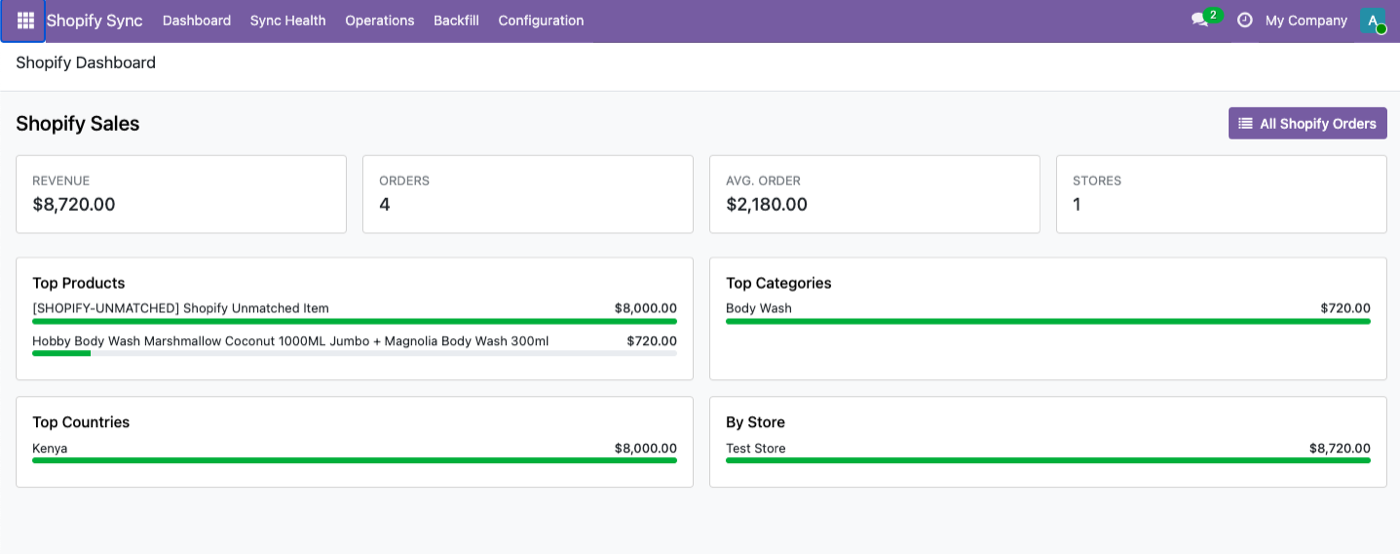
We sell an Odoo Shopify connector. We do not sell a SHEIN module. This is the evaluation we would run if you asked us to wire SHEIN tomorrow: official platform first, then failure behaviour, then whether a vendor app, hosted middleware, or a module you own is the shorter path.
You should walk away able to disqualify a connector in one call. If the vendor cannot name which Open Platform solutions they implemented, you already have the answer.
SHEIN’s Open Platform is the integration. Everything else is a wrapper.
SHEIN’s developer surface is the SHEIN Developer Platform. Their collaboration process is public and linear: open-platform account → create an application → application review → merchant authorization → solution integration.
A connector that “just needs your seller login” and never mentions that process is not talking to the Open Platform. It is scraping Seller Center, or it is hoping you will not ask.
The platform then splits business solutions the way a warehouse actually works:
| Official solution | What it is for | What Odoo must do |
|---|---|---|
| Product management | Publish catalogue via OpenAPI | Map Odoo variants to SHEIN category attributes, not just name + price |
| SHEIN fulfill orders | SHEIN integrated logistics: appointment delivery, shipping labels through the API | Create a sale order. Do not pretend Odoo is printing a DHL label from the picking |
| Seller fulfill orders | You warehouse and ship; you upload tracking and order status | Confirm delivery in Odoo, then push tracking back. Leaving the SHEIN order stale is how accounts get restricted |
| Stock preparation orders | You ship replenishment into SHEIN’s network, not the end customer | Treat it as an inbound to their warehouse, not a customer delivery |
Open capacity is listed separately: Webhook and OpenApi. Same pattern as Shopify — push events plus pull/repair. If the connector only polls every fifteen minutes and has no webhook path, ask what happens when SHEIN is faster than the cron.
Authorization is a signed request, not a pasted seller password
SHEIN’s own signature notes describe request signing with application credentials, timestamp, path and a secret. The get-by-token handshake is special: you sign with the application APP_ID / secret before you have the merchant’s openKey.
After the seller authorizes, keys can be reset. SHEIN lists “the merchant has reset the key” as a common signature failure, and tells you to check the authorization record in the application background.
What that means in Odoo: credentials live in a config record, not in a scheduled-action Python file. Token refresh and key rotation have to be a first-class screen. A connector that stores one static secret and never mentions re-authorization will die the first time someone rotates keys in Seller Center.
Ignore blog posts that flatten this into “OAuth 2.0, then XML-RPC into Odoo.” The Open Platform documents a signature. Odoo 19’s current external API is JSON-2 with a bearer key — not XML-RPC for new work.
SHEIN-fulfill vs seller-fulfill is not a checkbox
On Shopify, you almost always fulfill. On SHEIN you might not. If SHEIN ships, your Odoo delivery is not “print a carrier label from the picking.” It may be an appointment, a SHEIN label, or a stock-prep shipment into their warehouse.
If you fulfill, the connector must push tracking back. Marketplace seller programs punish silent orders. We will not invent a SLA we cannot cite. We will say this: importing the order without the matching shipping/status flow is an incomplete product.
Ask the vendor, in writing: which of the four Open Platform solutions does this module implement? A “full Shein integration” that only imports orders and pushes stock is a listing, not a fulfillment integration.
We learned the same lesson on Shopify with refunds vs ledger posts — commercial event and warehouse event are different people. How Shopify orders land in Odoo is the pattern: native sale.order, unmatched lines flagged, refunds as drafts.
Odoo variants are not SHEIN listing attributes
SHEIN listings want category-required attributes — size/color axes, material, care, image counts — that a standard product.template does not carry. The mapping layer is the product. If the connector dumps Odoo name + price into SHEIN and hopes, you fail category validation or you publish garbage.
Stock is the other trap. SHEIN will sell what you last pushed. If Odoo is multi-warehouse and the connector publishes “all on-hand” from every site, you oversell.
Same question we ask on Shopify: which location is the source of truth, and what happens on a missed webhook? Product and inventory sync · sync troubleshooting.
The payout is not the invoice
Marketplaces pay net of fees, refunds and adjustments, often per region. If the connector does not import settlement lines onto the orders and invoices, finance reconciles a lump sum forever. That is the most expensive silent cost in any marketplace ERP — we wrote a whole page for Shopify Payments because it is the line item people skip at purchase. Payout reconciliation.
Do not buy a “2026 tax compliance” slogan. US sales tax, EU OSS/IOSS, KSA e-invoicing and UK VAT are your Odoo fiscal localization plus whatever SHEIN remits. Confirm with your accountant what the marketplace already withholds. A connector can attach settlement data. It cannot be your tax advisor.
Vendor module, middleware, or a module you own
| When it wins | What you pay later | |
|---|---|---|
| Odoo Apps Store module | You can install on your edition, and the vendor names the Open Platform solutions | Upgrade rewrite; another vendor in your database |
| Hosted iPaaS / middleware | You need a demo this month and will accept another vendor in the data path | The integration dies if they do |
| Custom module you own | SHEIN is one channel among several and warehouse rules already live in Odoo | You own Open Platform review and category mapping |
Neither a store listing nor an iPaaS is Odoo S.A. software. Run the same failure questions we use for Shopify: API actually used, conflict policy, unmatched SKU behaviour, refund posting, settlement decomposition, rate-limit backoff, and whether traffic leaves your server. How to choose a connector.
A custom module — including one written with Odin AI module builder onto a test copy — is the right shape when you already own warehouse rules in Odoo. It is the wrong shape if you need SHEIN live next week and have no one to own Open Platform review.
Eight questions. Write the answers down.
- Which of the four Open Platform solutions are implemented — product, SHEIN-fulfill, seller-fulfill, stock-prep?
- Do you use webhooks, OpenAPI polling, or both? What repairs a missed event?
- Where do application secrets and merchant openKeys live after a seller resets them?
- Do SHEIN orders become native
sale.orderrecords the warehouse already uses? - Which Odoo warehouse is allowed to publish stock?
- How do unmatched SKUs land — fallback line with a log, or a silent skip?
- Do settlements decompose onto invoices, or is finance left with a lump sum?
- Does any order payload leave our server?
Official documentation
- SHEIN Developer Platform — solutions, webhooks/OpenAPI, collaboration process
- SHEIN signature / authentication notes — APP_ID handshake, merchant key reset
- Odoo Sales — where imported marketplace orders should land
- Odoo Inventory — stock, routes, deliveries
- Odoo 19 External API (JSON-2) — current HTTP API; keys last at most three months
FAQ
Does Odoo have a native Shein integration?
No. Odoo S.A. does not ship a first-party SHEIN app. You use SHEIN’s Open Platform plus a vendor module, middleware, or a custom Odoo module.
What is the SHEIN Open Platform?
SHEIN’s official merchant API: product publish, SHEIN-fulfill vs seller-fulfill vs stock-prep orders, plus webhooks and OpenAPI. Applications are reviewed; sellers then authorize the app. Process is on the developer homepage.
SHEIN fulfill or seller fulfill — which should the connector support?
Whichever you actually run. They are different Open Platform solutions. Importing orders without pushing the matching shipping or status flow is an incomplete product.
Is Odin’s Shopify connector the same as a Shein connector?
No. Odoo Shopify Sync talks to Shopify’s GraphQL Admin API. SHEIN is a different platform, signature model and fulfillment split. The evaluation questions transfer. The code does not.
Can Odin AI write a Shein module?
It can write a real Odoo module on a test copy. You still need Open Platform credentials, category mapping and a person who owns SHEIN’s review process. Module builder.
Where do Shein orders belong in Odoo?
As native sale orders with a marketplace reference, then deliveries and invoices — not a side table the warehouse never sees. Same rule as Shopify order sync.
Marketplace cluster
If SHEIN is one channel, Odoo still has to be the warehouse.
We ship Shopify today. For SHEIN we will tell you honestly whether a module, middleware, or a test-copy build is the shorter path.